Through digital sovereignty, Microsoft aims to give businesses and organizations full control over their data in the cloud. This includes storing data in Europe, strictly controlling access, and allowing customers to manage their own encryption. With the Sovereign Cloud, Microsoft offers flexible operating models – ranging from public cloud to fully on-premises environments – so that companies can decide for themselves where their data is stored, who has access to it, and how it is processed and protected.
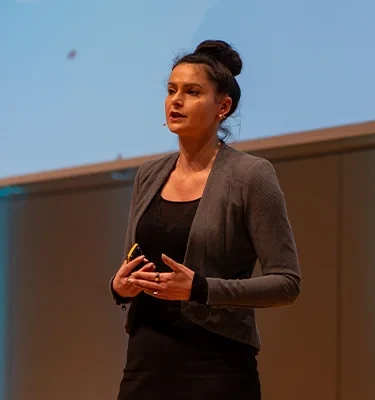
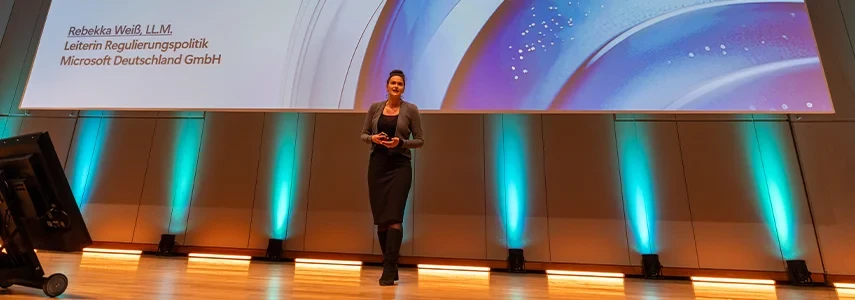
At ELO HORIZONS in March, we had the opportunity to speak with Rebekka Weiß, Head of Regulatory Policy at Microsoft Deutschland GmbH, about digital sovereignty.
Ms. Weiß, in your presentation you talk about digital assurances for Europe. What exactly makes these assurances so crucial for digital sovereignty – and how can our customers tell that they are actually effective?
Digital sovereignty is never achieved through mere declarations of intent, but rather through the interplay of three elements: legally binding commitments, additional technical measures, and robust governance systems. Together, they deliver exactly what customers and partners expect – full control over their own data and, at the same time, the freedom to continue innovating. These assurances have real value when they can be verified: They are already in operation, have been incorporated into our contracts, and can be technically verified – for example, through the storage and processing of data in Europe and through traceable, logged access controls. For us, therefore, assurance does not mean a promise, but verifiable implementation.
Data protection, compliance, and cloud resilience requirements are constantly increasing in Europe. How does Microsoft manage to incorporate these regulatory requirements – some of which vary greatly – into a unified yet secure cloud architecture?
The key lies in the cloud’s underlying architecture: If compliance is built in from the start, there’s no need to painstakingly add it later. That’s exactly what we’re committed to with the broadest sovereignty portfolio on the market – ranging from the public cloud to private, on-premises environments and partner-operated clouds. Customers can meet their requirements without having to migrate to separate data centers or operate duplicate systems. Sovereignty isn’t an on/off switch, but rather a spectrum: Each organization chooses exactly the level of control required by its market and regulatory environment. Because the security and compliance building blocks are already embedded in the foundation, the architecture remains consistent, yet still tailored to each organization’s needs.
A key element of your presentation is the legally binding commitments made to European companies and authorities. What changes have these commitments already brought about in practice – and where do you still see a need for action?
The most significant change is speed: Because these additional safeguards – especially at the contractual level – build trust and provide legal certainty, organizations are now making their cloud decisions more quickly and launching new digital transformation projects that were previously approached with hesitation. Commitment is thus a central pillar of our strategy – not only to maintain trust but to reinforce it. The primary need for action now is to continuously refine our commitments and offerings in step with a changing geopolitical landscape and growing regulatory expectations. Sovereignty is not a final state, but an ongoing commitment.
Digital sovereignty is built not only through technology, but also through trust. How does Microsoft build this trust, particularly with institutions that are skeptical or critical of global cloud providers?
Trust never arises on its own; rather, it grows over the years, primarily through reliable relationships with customers and partners. Microsoft has been firmly established in Germany and Europe for over four decades, and this connection to the market is a cornerstone of trust. But trust also requires control. That’s why we offer institutions concrete choices across our entire cloud portfolio, supplemented by legal safeguards. This is particularly crucial where organizations are wary of global providers: They retain control over where their data is stored, who accesses it, and how it is encrypted. In this way, trust isn’t simply given – it’s backed by verifiable evidence.
Europe is engaged in an intense debate about how to address AI, data spaces, and cybersecurity. What role does Microsoft play in this European digital agenda – and which partnerships do you personally find most effective in strengthening resilience and innovation?
The key concept is innovative strength. We see ourselves as a partner to the European business community, working on the ground, side by side with our customers. We contribute infrastructure, software, and experience; our customers bring their industry and sector expertise. This collaboration creates real value: AI not only enables more efficient processes but also opens up entirely new opportunities here in Europe. For me, the most effective partnerships are those that combine European control with innovative capacity – for example, when we work with local partners to create secure environments for public administration. It is precisely in this collaboration between global technology and local responsibility that Europe’s opportunity lies.
Thank you very much for your time and these valuable insights!
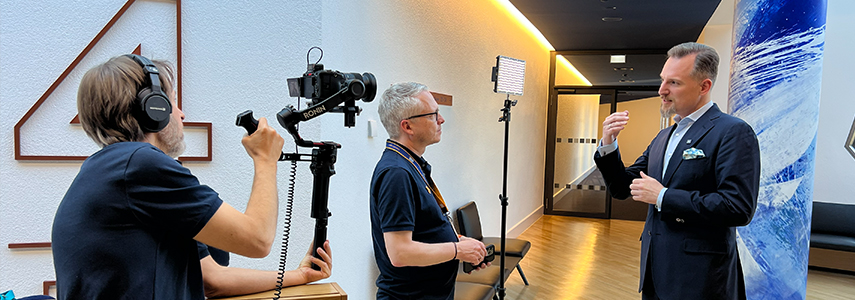
The interview was conducted by Stephan Buckenmaier, Head of Corporate Communications at ELO Digital Office GmbH
Rebekka Weiß is a fully licensed attorney and Head of Regulatory Policy at Microsoft Germany. She serves as the point person for issues related to data and competition policy, artificial intelligence, digital safety, and digital sovereignty.