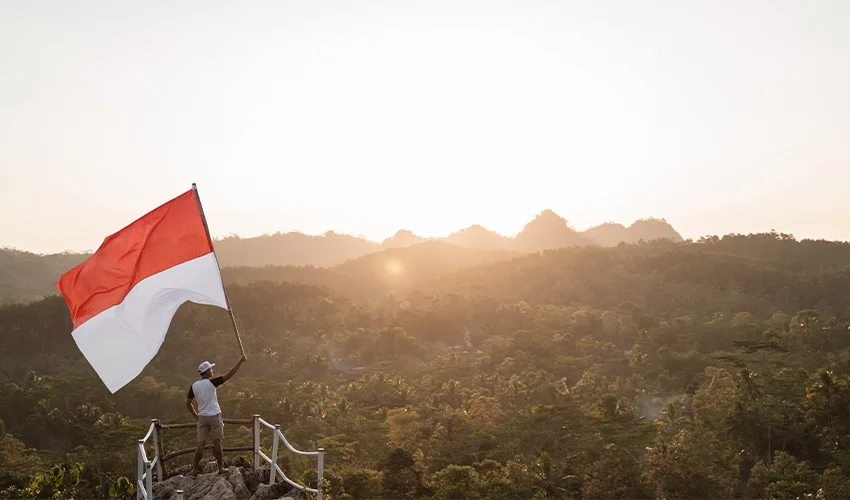
As the largest island country in the world with a total of 17,508 islands and over 274 million inhabitants, Indonesia is home to an impressive variety of ethnicities, languages, and cultures. The country is renowned for its art, music, dance, and craftmanship, as well as its breath-taking rainforests, volcanoes, beaches, and coral reefs. Indonesia is also home to endemic flora and fauna, as well as diverse ecosystems. Yet at the same time, the country currently faces challenges such as social inequality, natural catastrophes, and environmental pollution. Rising sea levels around Java are posing an increasing threat to the capital city of Jakarta and therefore to the economic and industrial heart of the island country. As a result, the capital is being successively transferred to East Kalimantan on Borneo, where it will be known as Nusantara in the future – a mammoth undertaking.
Written by Delia Alf
Innovative technology, traditional agriculture, and environmental challenges
Over the past years, Indonesia has made significant progress in digitalization, the economy, and administration. Since the corona pandemic, the country has been comprehensively implementing end-to-end digital transformation in many areas, including in economic affairs and the public sector. Digitalizing analog and paper-based processes has opened up new opportunities and access to a better quality of life for many people. This not only benefits the government and businesses, but also the entire population. The development of innovative technology, resource-efficient work, and a reduced carbon footprint have shown that digitalization can be in line with environmental protection. Since 2019, ELO has been supporting Fairventures Worldwide gGmbH, a company that is working to reforest cleared areas in Indonesia. Local farmers have been provided with digital tools and apps for this, to quickly and easily document key figures on their fields.
The economy is booming
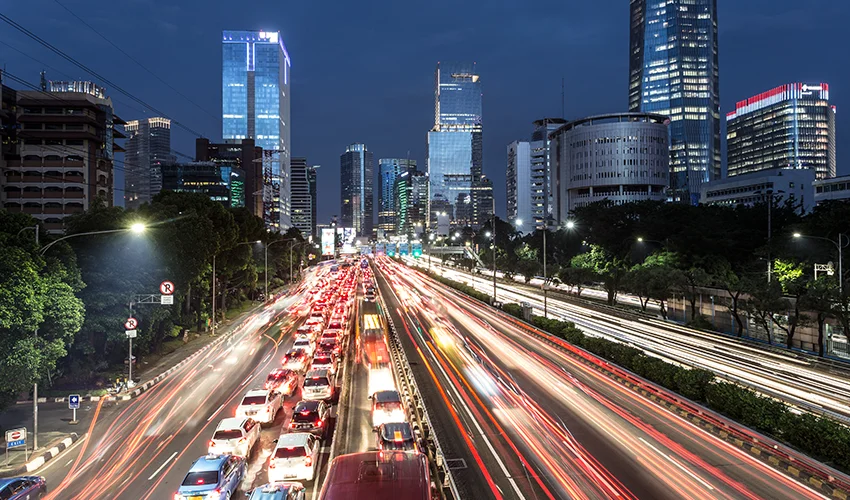
Countless start-ups and innovative companies have sprung up in the major cities. And people in remote areas are also benefiting from the digital transformation: The introduction of digital marketplaces and e-commerce platforms has made it significantly easier to access products and services. Mobile payment options and digital financial service providers have also made it possible to perform transactions at any time and from any location. This has significantly extended the traditional banking services. The government is also actively supporting the digital transformation of the economy with grants, investments, and by expanding technology parks.
Targeted promotion of digital processes has become part of daily business in the capital. However, the situation is different in the outlying areas of Indonesia, which is why the focus in those parts of the country is currently on the digital infrastructure (for example, developing 5G). Digital processes and solutions will follow down the line.
A strong digital foundation for Indonesian administration
Administrative processes are also on a clear digital course in comparison to other countries. Electronic government portals enable citizens to access information and services more easily. The transition to digital administrative systems has slimmed down bureaucracy, accelerated decision-making processes, and reduced costs considerably. And the introduction of e-government services not only increases transparency, it also helps to combat corruption.
This digital dynamism in the economy and public authorities reflects a society that highly values the fast and direct transfer of information. The government ensures an innovative infrastructure and nationwide internet access – and the entire country benefits from this.
ELO in Indonesia
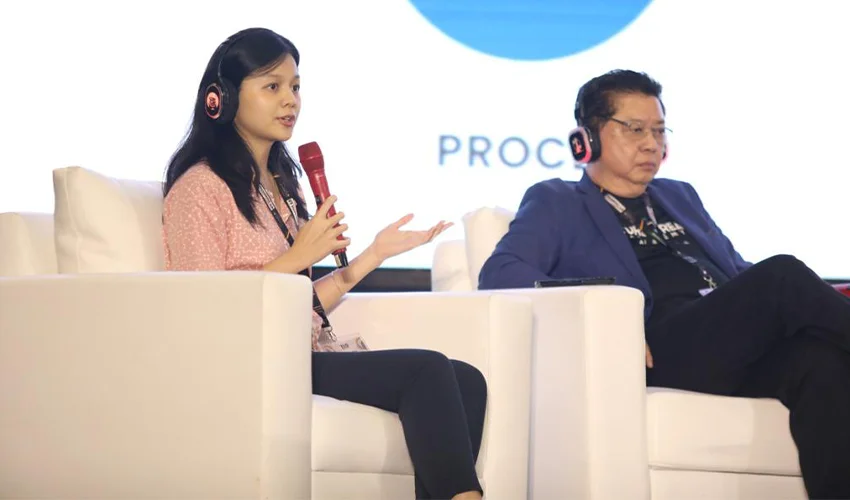
“There is a growing awareness of the value of digital processes, in particular since the pandemic,” explains Indonesian-born Daniella Elizabeth, who has been working at the ELO Indonesia office since 2019. The office in the capital city of Jakarta was established in 2006 and makes a valuable contribution to digitalization in the country.
Daniella worked as an intern at ELO in 2016, before she completed her Business Information Systems degree. As a business development manager, her duties now include collaborating with Sales, Presales, and the Business Support team. She also creates presentations, manages projects, and coordinates marketing activities such as social media, events, brochures, websites, and much more.
“Some companies in Indonesia, including ELO customers, are already starting to create new departments called ‘Digital Transformation Teams’,” says Daniella. These departments focus on planning, developing, and implementing a digitalization platform. They also provide support for the digital infrastructure and consulting for selecting products and solutions.
Remote work is also big right now, Daniella continues. A lot of companies are switching from laptops to tablets and mobile devices, so that employees can complete their tasks in work-related applications. In many companies, management also supports mobile work that enables employees to become more and more familiar with digital processes and solutions. Because digital transformation is becoming a major focus in society, we are seeing more companies in the industry entering into an “arms race”. This competition with one another to be the “most digital” indicates the direction of the Indonesian economy. Daniella also agrees. Large customers that have digitalized their companies and organizations using ELO solutions are predominantly in the energy sector, public administration, agriculture, telecommunications, and healthcare. E-records for the public sector, banking, and the government saw the highest demand – now, the capital city is well positioned where digitalization is concerned and equipped for a secure future. “Customers also regularly emphasize how ELO has made their daily working life easier and that the new solutions are particularly well-received by employees due to their innovative application and fast implementation,” adds Daniella.
Indonesia, a country between nature and technology, tradition and innovation, is paving its way into the digital world – and ELO is right there helping to shape the country’s future.
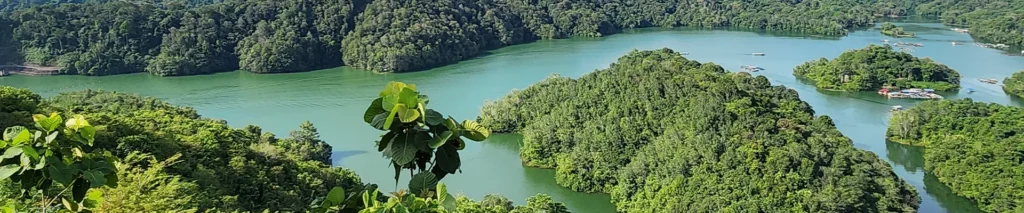
Digitization is fundamentally changing work, communication and access to services, promoting economic growth and strengthening the country as a digital hub in Southeast Asia.