

Two years since the COVID-19 pandemic began, it’s time to assess where we’re at today. The working world is going through its most radical changes in decades. The usual working models are suddenly no longer sustainable. Many companies, especially SMEs, still aren’t prepared.
Written by Andreas Dumont

Workplace attendance requirements
Companies in Germany have been lagging behind in terms of digitalization for some time now. Before COVID-19 took the stage, it was standard to be present at the workplace in Germany. Working from home was frowned upon or not allowed altogether. This shows a lack of trust in employees and short-sightedness on the part of management. Regardless of their actual performance, employees present on location were often seen as more productive and involved – a fallacy. The reasons for this obsession with control and attendance requirements was often the fact that managers didn’t believe their employees were actually doing their work from home. In Germany, trust-based working time remained marginalized as a work model.
But don’t forget: Most of the digital solutions that have helped get us through the crisis today didn’t exist just a few years ago. With the IT back then, it simply would have been impossible to shift entirely from working at the office to home. Digitalization, the cloud, networked processes, automation, and intelligent machines have changed many workplaces fundamentally, even before 2019. Companies that put on the brakes back then are unable to take off today.
A hasty transition to working from home
As Covid-19 emerged, most companies were totally unprepared and the transition to working from home was fast and in some cases hasty. Companies had to organize the shift from the office to their employees’ apartments within a few days’ time. But introducing and maintaining working from home models is a multi-faceted and complicated matter.
Time pressure resulted in many solutions being improvised and implemented inadequately, often without taking due consideration for security, labor law, and data protection. Or, the companies relied on products they patched together that weren’t really a good fit. Structures that otherwise would have taken years to develop had to be established within just weeks. But it’s important to note that in many places it worked exceptionally well.
The transition from the office to the “new work” environment revealed exactly where companies were lagging behind in terms of digitalization. In many SMEs, communication processes these days are anything but ideal and the flow of information stagnates. The main task companies face is to close these gaps. The industry, but also the size of the company, plays an important role. Larger companies were able to expand their capacities to have employees working from home effortlessly, while SMEs often didn’t meet the technical requirements and lacked the necessary knowledge. The pandemic has at least raised awareness for the problem and sped up this transformation dramatically.

The crisis will pass, but decentralized working is here to stay
The German culture of being present at the workplace has had its day, and for companies, it’s time to find new ways and solutions to remain competitive – with or without the pandemic. Digitalization goes hand in hand with new work: Papers and folders have proven to be impractical for decentralized teams, and today the cloud is omnipresent. While the matter of “where” to work seems to have largely been answered, other questions are coming to the fore. How can workflows be improved, and what does the hybrid workplace of the future look like?
It’s become impossible to imagine the company landscape without the option to work from home. It’s the new normal and will outlast the pandemic. As the demand for skilled workers is by far exceeding what’s on the market in many industries, many WFH adversaries are realizing that changing wants and needs have to be met in this “war for talent”. Flexible work models allowing staff to work at the office and at home will be a minimum requirement for future employees. In the meantime, many companies have also noticed that productivity hasn’t lacked at all since transitioning to WFH – and remote work can even save costs.
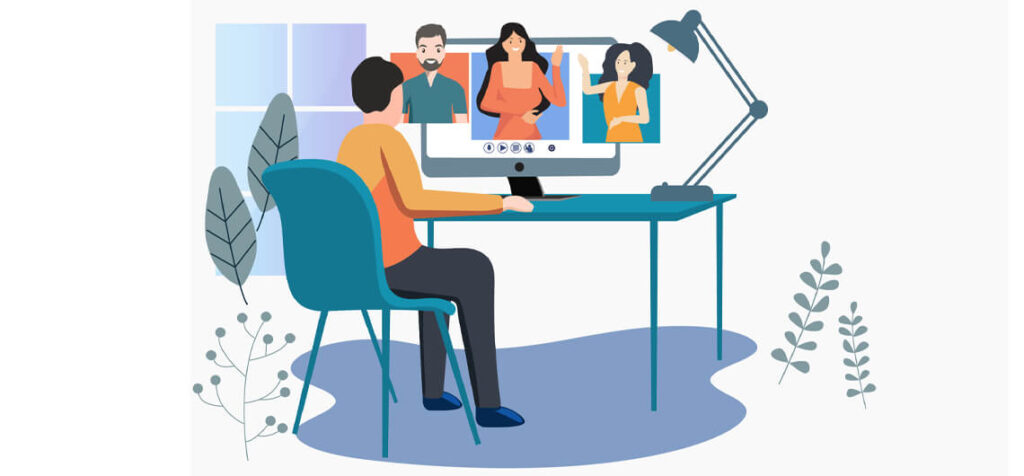
Hybrid work models gaining acceptance
Express digitalization has paved the way for hybrid working models. The idea behind this concept is to link mobile and office-based working. Less realistic are either-or models, with employees working full-time either at the office or at home. The future of the working world will come down to hybrid models.
This combines the best of both worlds: the flexibility of working from home and the advantages the office offers in some areas, such as communication. For hybrid concepts to work, companies need a strategy, which in turn requires management to change its thinking. Now is the chance to give these hastily introduced structures firmer footing. One day, the COVID-19 pandemic will end. Remote work is here to stay.
Author Andreas Dumont worked for multiple publishing houses as a professional journal editor for around 20 years. In 2019, he went freelance as a journalist.


It’s become impossible to imagine the company landscape without the option to work from home. It’s the new normal and will outlast the pandemic.



