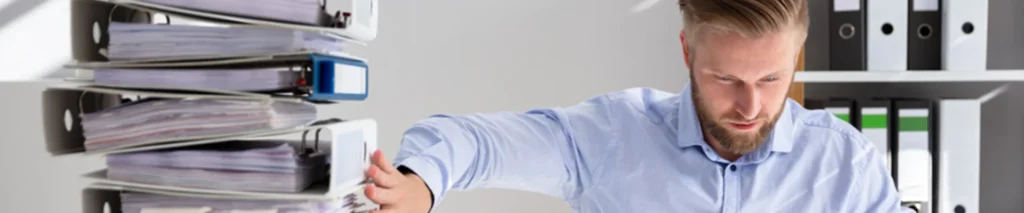
…and cut down on paper. The many benefits of a digital strategy in today’s world not only relate to streamlining business processes and boosting company efficiency but include sustainability and environmental protection aspects. Paper, in its many forms, is an essential part of everyday life, ranging from food and medicine packaging to hygiene products and much more. That’s why we have to set priorities. We still print invoices, contracts, e-mails, and other documents merely out of habit, although we really don’t always need to. Reducing wasteful paper consumption is the way forward.
Written by Delia Alf
Facts about paper production
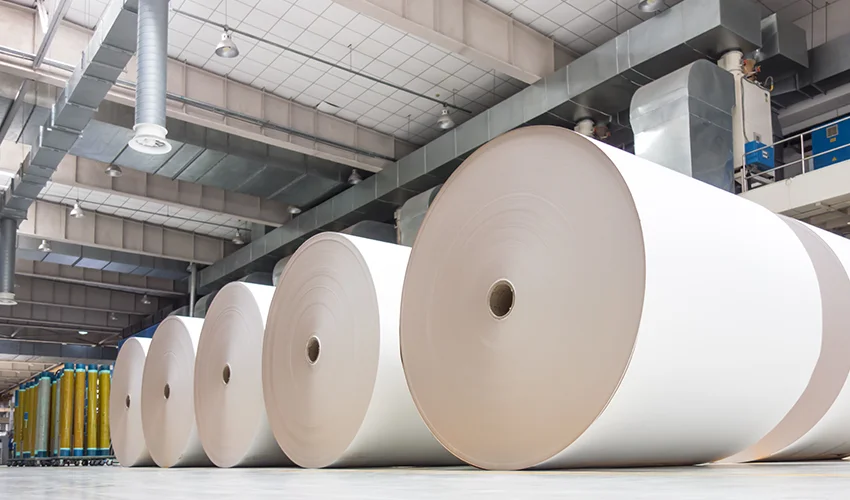
Paper is made from the cellulose fibers contained in wood. The production process not only uses vast amounts of water and chemicals for bleaching and dyeing, but potentially also waste paper. Depending on which information source you draw on, it takes nine liters of water (Papierfakten.de) or around 50 liters (German Environment Agency) to produce one kilogram of paper. According to the first source, producing one kilogram of paper in the 1970s consumed around 50 liters of water; today, it is “only” just under nine liters. That doesn’t sound like much at first but when you consider that, according to Papierfakten.de, around 22.7 million tons of paper and cardboard are produced in Germany, these nine liters amount to a staggering 20 billion liters of water. If you take the figures of the other source, that number is five times higher. In addition, the production process needs large amounts of energy. One kilogram of printer paper (equivalent to 200 sheets) requires about 13 kWh. This is roughly the same amount of energy that a laptop uses in 400 hours. Producing hygiene products, such as toilet paper, from paper fibers requires even more water (77 liters) and energy (19kWh).
Conscious consumption
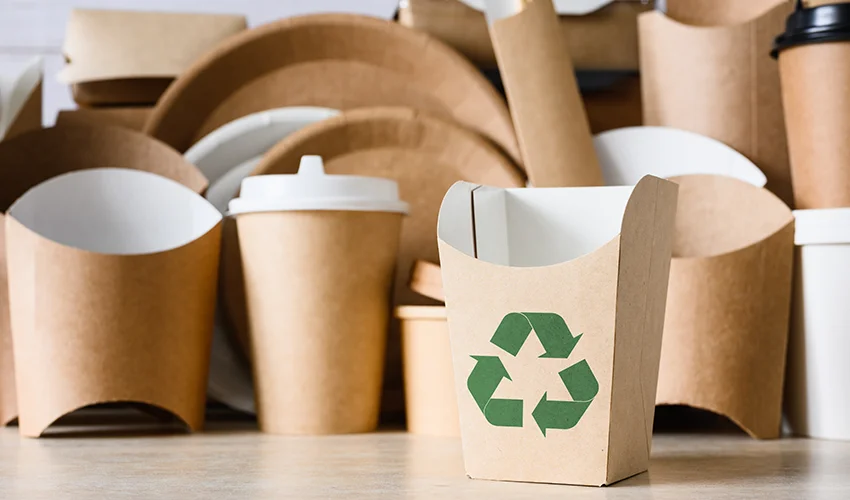
No-one is saying that we shouldn’t be using paper at all. As packaging and hygiene products, there are still very few alternatives to paper. Compared to plastic, paper is undoubtedly the better choice as packaging material. The paper production process may not be truly sustainable but at least paper can be recycled and poses fewer problems than plastic when it comes to disposing of it. And, as there are not really any alternatives to disposal hygiene products such as toilet paper, buying recycled at least can save up to 20 liters of water and 13.5 kWh of energy. Not to mention the wood required to produce fresh fibers, which is not recycled at all.
Where do we need to take action?
Paper consumption in Germany is alarmingly high: 227 kilograms per person in 2019. Moreover, Germany is the world’s largest exporter and importer of paper. Not only does paper production destroy important habitats for both animal and plant species, but the climate is also being impacted, hence the urgent need for action.
More than a third of paper is used in offices, schools, and public administrations, areas where we can cut down on the amounts used. Due to the lack of viable alternatives for hygiene products and packaging, we need to drastically curb our consumption in other areas.
How we can create a better future
The world is becoming more digital, technologies are becoming more agile, and software programs are becoming easier to use. We need to leverage this transformation. Most companies have computers, scanners, and other hardware that speed up digitization of analog business processes. There are more and more IT systems on the market with industry solutions that are used by most companies and in the public sector. These are not just used to digitalize numbers and tables, but also to digitally manage document-based information. ECM providers offer such solutions.
An ECM system is a secure, fast, and transparent foundation for a company-wide digitalization strategy. It easily integrates with existing IT landscapes and third-party systems. Digital management of business documents and data means that employees are no longer tied to a specific location or dependent on resources. The company benefits from digitally transformed processes throughout the entire organization, not to mention saving resources and office space.
Establish priorities
Every step towards digital transformation is a step in the right direction. Standard software solutions, such as Office programs, as well as industry-specific, ERP, or ECM solutions, help businesses to implement digitalization. We will likely never be able to do without paper entirely. However, identifying priority areas where we have to rely on paper products is a major step towards a sustainable future that protects our environmental as well as our economic goals.
Read more here about how you too can lead your company into a paperless future and the benefits it brings.