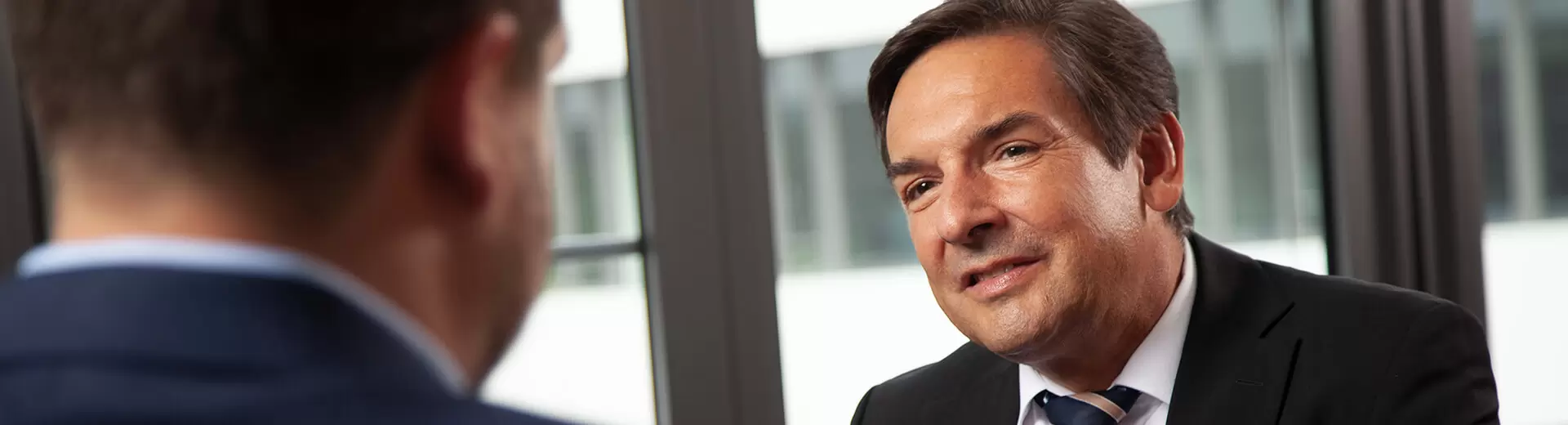
A virus is turning the German business world upside down. Karl Heinz Mosbach, CEO of ELO Digital Office GmbH, explains that the degree of digitization at companies is ultimately the deciding factor when it comes to productive remote work.
Mr. Mosbach, the corona crisis has managed to do something that many years of technological progress couldn’t basically overnight: Germany is working from home. How is this going?
It’s definitely an experiment sending 100% of the team to work from home. At least it is for us – and as a company focused on digitizing business processes, of course we are ahead of the pack. I’d go as far as saying that this experiment has gone astoundingly well for ELO Digital Office up to now. And there are sure to be many companies experiencing the same positive results. Businesses where digitization didn’t play a large role up to now – they are having trouble with remote working or aren’t even able to offer the option at all. This is the case in many areas of public administration, for example, and goes to show how far behind Germany is in terms of digitization compared with the rest of the world.
Does this mean that the crisis may result in some rethinking and, in particular, increased investments into digitization?
I hope so! After all, people are inclined to quickly forget a crisis once it’s over. The fact is: Considering our expertise and knowledge, we could be much farther down the road here in Germany.
So what’s holding us back?
Prosperity tends to make us sluggish, and the economy in Germany has been excellent in recent years. The corona crisis will likely reshuffle the deck. Policy makers have demonstrated that it’s possible to act quickly and with resolution. This is what we need when it comes to digitization if we don’t want to become the extended workbench of China and the US.
Is now the time to invest and encourage digitization?
Right now. Take a look at the countries that are managing the corona crisis relatively well. The degree of digitization in these nations is very high, for example in Singapore or South Korea, where both communication and the testing situation are considerably better, which has a positive effect on the number of cases.
Many industries have become quite creative in response to the corona crisis in order to keep their businesses running. What has impressed you most?
Honestly, what impresses me most is how everyone is sticking together – pictures of people singing on their balconies in Italy, companies introducing initiatives to donate alcohol for disinfectant or converting their production facilities to manufacture protective clothing without hesitation.
Do you think this forced work-from-home “experiment” will develop into a new work culture?
As working from home was only an option for a small number of employees up to now, I think that both companies and employees can learn lots from the current situation – for example that it’s possible to manage an entire company from home, that productivity remains high with staff working from home, and that communication may even improve. The increase in communication brought about by distance was a pleasant surprise. We will definitely learn some lessons from this current situation, and I am certain that we are not alone in this.
Demand for your products must be relatively high right now.
Indeed it is. And we have responded with special offers for our customers. For example, we have prepared custom solution packages for working at home that companies can roll out very quickly. These offers are also tailored to the company’s current situation. We want to help our customers quickly without red tape, and make sure they can keep working.
Are there any products that are currently of particular use and value to your customers?
Definitely. Our collaboration solution ELO Teamroom, which is currently undergoing further development, is obviously a great relief for our customers. This solution allows communication to be moved to virtual project rooms, enabling participants – external service providers included – to discuss and edit documents. But ELO Learning and ELO Knowledge also provide immense relief in this kind of situation, as customer feedback has shown.
Has the crisis provided you with inspiration for your digital solutions?
In fact, it has. After all, as a company we are also learning a great deal from this unusual work situation. We’ve already come up with a bunch of new ideas that we will incorporate into existing ELO solutions – and ones that may be transformed into totally new products. Challenges are simply opportunities in disguise.
The interview was conducted by Julia Thiem
“The degree of digitisation of companies ultimately determines how productive work can be done even in times of crisis.”


Stay up to date
Our free newsletter keeps you in the loop about new products, upcoming ELO events in your area, or about general trends and developments in the field of ECM.